


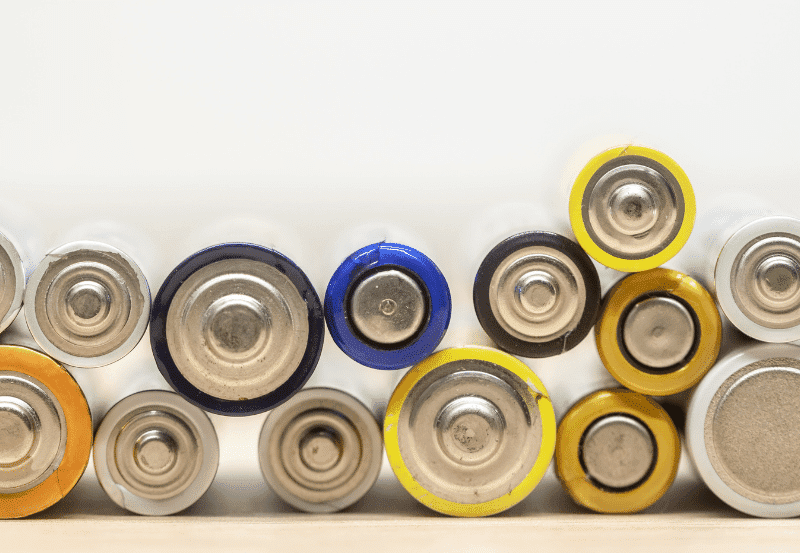
Recycling of WEEE is a specialist part of the waste and recycling industry. It is a rapidly growing sub-sector due largely to the implementation of the original WEEE Directive in the UK by the WEEE Regulations 2006, With that came the associated requirements for the recovery, reuse, recycling and treatment of WEEE. The Waste Electric and Electronic Equipment (WEEE) Regulations 2013 (“the Regulations“) became law in the UK on the 1st of January 2014 and replaced the 2006 Regulations. The new Regulations transpose the main provisions of Directive 2012/19/EU on WEEE which recasts the previous Directive 2002/96/EC. These regulations also provide for a wider range of products to be covered by the Directive with effect from 1st January 2019.
Further information on the WEEE Regulations 2013 can be found in the Government Guidance Notes (PDF) produced by the Department for Innovation and Skills.
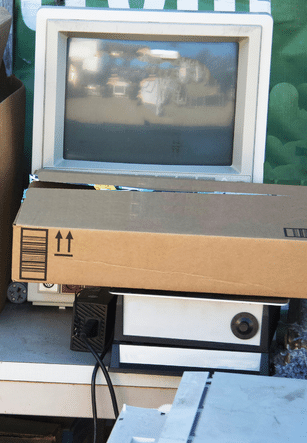
Every year an estimated 2 million tonnes of WEEE items are discarded by householders and companies in the UK. WEEE includes most products that have a plug or need a battery. There are ten broad categories of WEEE currently outlined within the Regulations (see Schedules 1 and 2 of the Regulations), namely:
- Large household appliances – eg fridges, cookers, microwaves, washing machines and dishwashers
- Small household appliances – eg vacuum cleaners, irons, toasters and clocks
- IT and telecommunications equipment – eg personal computers, copying equipment, telephones and pocket calculators
- Consumer equipment – eg radios, televisions, hi-fi equipment, camcorders and musical instruments
- Lighting equipment – eg straight and compact fluorescent tubes and high intensity discharge lamps
- Electrical and electronic tools – eg drills, saws and sewing machines, electric lawnmowers
- Toys, leisure and sports equipment – eg electric trains, games consoles and running machines
- Medical devices – eg (non infected) dialysis machines, analysers, medical freezers and cardiology equipment
- Monitoring and control equipment – eg smoke detectors, thermostats and heating regulators
- Automatic dispensers – eg hot drinks dispensers and money dispensers
The scope of the Regulations will be extended from January 2019 to cover further categories of electric and electronic equipment (EEE) (see Schedules 3 and 4 of the Regulations for more information)
Treatment of WEEE
Large household appliances (eg ovens, fridges, washing machines) currently make up over 40% of WEEE but there are large volumes of other equipment such as IT equipment (mainly computers), TVs (over two million discarded each year), small household appliances (eg kettles and hair dryers), electrical tools, digital watches, electronic toys and medical devices.
Such items contain a wide variety of materials, eg an average TV contains 6% metal and 50% glass, whereas a cooker is 89% metal and only 6% glass. Other materials found include plastics, ceramics and precious metals.
As a result of this complex mix of product types and materials, some of which are hazardous (including arsenic, cadmium, lead and mercury and certain flame retardants) WEEE recycling poses a number of health risks that need to be adequately managed. For example, exposure to substances released during processing (such as mercury released from fluorescent tubes, lead and phosphorous pentachloride as a result of breaking cathode ray tubes).
It is important to stress that if effective measures are taken to control exposure to mercury and lead then normally the control of exposure to other hazardous substances should also be adequate.
The exact treatment of WEEE can vary enormously according to the category of WEEE and technology that is used. Some treatment facilities utilise large-scale shredding technologies, whilst other use a disassembly process, which can be manual, automated or a combination of both.

